

Imagine avoiding the tedious court process most families endure when transferring assets after death. Probate proceedings often drain estate resources while keeping heirs waiting months or years for their inheritance. Grieving families shouldn’t face additional bureaucratic burdens during an already difficult time. Fortunately, several legal strategies can completely bypass this cumbersome process.
Yes, property can be transferred without probate through several legal methods including joint tenancy, transfer-on-death deeds, and living trusts. These approaches allow assets to pass directly to beneficiaries while avoiding court proceedings entirely.
In this blog I will explore everything related to property transfers without probate proceedings.
Key Takeaways
- Joint tenancy property with right of survivorship automatically transfers to co-owners upon death without court involvement.
- Living trusts hold property outside personal names, allowing direct transfer to beneficiaries and completely avoiding probate proceedings.
- Transfer-on-death deeds enable real estate to pass directly to named beneficiaries without requiring any court supervision.
- Accounts with designated beneficiaries, including life insurance and retirement accounts, bypass probate and transfer automatically upon death.
- Small Oregon estates under $275,000 in personal property qualify for simplified procedures that avoid traditional probate requirements.
What Is Property Probate?
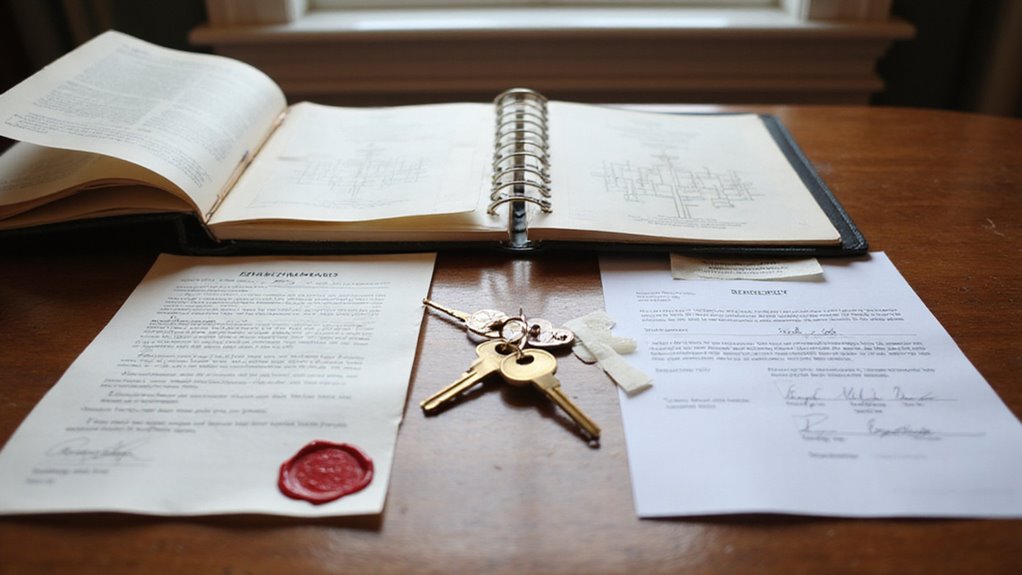
Property probate transfers a deceased person’s assets to heirs through court supervision. This legal process validates the will and distributes property according to law. Courts appoint an executor who handles the deceased’s affairs throughout the proceedings.
The process typically takes 6-12 months in Oregon and creates public records of all transactions. Families often face unexpected costs and delays during an already difficult time.
However, several alternatives can help avoid probate entirely. Living trusts, joint ownership arrangements, and transfer-on-death deeds offer smoother solutions.
These methods protect privacy and reduce expenses for grieving families. As a result, property transfers happen faster and with less court involvement.
What Assets Can Be Transferred Without Probate?

You can transfer several types of assets without going through probate in Oregon. These include property held in joint tenancy, accounts with designated beneficiaries, assets placed in living trusts, estates qualifying under small estate procedures, and real estate with transfer-on-death deeds. Each method has specific requirements you’ll need to follow to ensure your property passes directly to your heirs.
Joint Tenancy Property
Joint tenancy with right of survivorship allows property to transfer automatically when you die in Oregon. This bypasses probate completely. Your co-owner immediately receives full ownership without court involvement.
The deed must explicitly state “right of survivorship” and be properly recorded. This method creates a private transfer that saves both time and money. Many couples choose this option for seamless transitions.
Furthermore, this approach works particularly well for spouses planning their estates. The property becomes part of your non-probate assets. As a result, your family avoids lengthy legal proceedings while receiving their inheritance faster.
Property With Designated Beneficiaries
Designating beneficiaries allows assets to transfer directly to loved ones without probate in Oregon. You can name beneficiaries on multiple financial instruments for immediate transfer after death.
Life insurance policies pay proceeds directly to named beneficiaries. Retirement accounts like 401(k)s and IRAs pass to beneficiaries without court involvement.
Payable-on-death bank accounts let recipients claim balances immediately. Transfer-on-death investment accounts move securities directly to your chosen beneficiaries.
These powerful designations override your will’s instructions. Your family avoids lengthy probate delays through this approach. Your loved ones receive assets quickly during a difficult time.
Living Trust Assets
A living trust holds your property outside your personal name to avoid probate in Oregon. Assets transferred to your trust belong to the trust entity, not your probate estate. Your successor trustee can distribute these assets directly after your death without court involvement.
You must formally retitle real estate, bank accounts, and investments into the trust’s name for protection. This step shields your heirs from lengthy court processes. Moreover, it reduces administrative expenses significantly.
Your beneficiaries receive their inheritance privately and efficiently through this arrangement. The trust creates a smooth transfer system that operates independently of probate courts.
Small Estate Assets
Oregon offers simplified probate for small estates under $275,000 in personal property and $200,000 in real property. This process uses an affidavit instead of court proceedings.
The small estate process reduces fees and eliminates most court requirements. Asset transfers happen within weeks rather than months. You’ll file basic paperwork and pay minimal fees compared to standard probate costs.
During difficult times, this streamlined option helps families handle assets quickly. Banks and other institutions will release the deceased’s property directly after receiving your completed affidavit. As a result, you can settle affairs and support family members sooner.
Transfer-on-Death Deeds
Transfer-on-death deeds allow property transfer without probate court proceedings. To create a valid deed in Oregon, use the state’s official form with correct property descriptions and beneficiary names. You must sign it with a notary present and file it at your county recorder’s office before your death.
This method offers several advantages for your heirs. Your beneficiaries save time and money by avoiding lengthy court processes. Their privacy remains protected since probate records are public. The property transfers smoothly to your chosen recipients after death.
Furthermore, you maintain complete ownership while alive. The deed becomes effective only after death, providing both control and peace of mind.
How To Create A Transfer-On-Death Deed?

Creating a transfer-on-death deed requires you to follow Oregon’s specific legal requirements to ensure your property transfers directly to your beneficiaries without court involvement.
You’ll need to use the state-approved form, provide an accurate legal description of your property, designate your chosen beneficiaries by name, and complete proper notarization before recording the deed with your county recorder’s office while you’re still alive.
Each step must be executed correctly, or your deed may be invalid and force your heirs into the probate process you intended to avoid.
State Law Requirements
Oregon law requires specific steps to create valid transfer-on-death deeds. You must use Oregon’s statutory form that follows ORS 93.948-93.979. The property needs an accurate legal description from existing records.
Your signature must be witnessed by a notary public while you remain mentally competent. The deed must be recorded with your county recorder before your death. Proper completion ensures your beneficiaries receive property without probate delays.
Missing any requirement will invalidate your deed. This forces your estate through probate and delays transfers to your loved ones. As a result, your planning efforts may be wasted.
Property Description Documentation
Legal descriptions appear on your current deed, mortgage documents, or property tax statements. These descriptions contain lot numbers, block numbers, subdivision names, and measurement details rather than just street addresses. Copy this information exactly when preparing your TOD deed. Accurate documentation ensures proper property transfer after death.
Even minor errors can invalidate your deed or cause delays during title changes. For this reason, verification is essential before recording.
Furthermore, county recorder offices and real estate attorneys can help confirm your description’s accuracy when needed.
Beneficiary Designation
Your beneficiaries are the people who’ll inherit your property after death. Name specific individuals on your transfer-on-death deed to avoid court involvement. This ensures direct property transfer without probate delays. You must include full legal names and current addresses of all beneficiaries.
If naming multiple people, specify the percentage each person receives. Always identify alternate beneficiaries as backups. Keep all beneficiary information updated regularly.
Proper designations protect your family from unnecessary expenses. They also eliminate potential legal complications during an already difficult time. Your loved ones will appreciate this thoughtful planning.
Proper Execution And Recording
Complete four key steps to make your TOD deed legally valid. First, get the state-approved form from your county recorder’s office or Oregon State Bar website.
Next, fill out all information accurately, including property descriptions and beneficiary names. Then have your signature notarized while the document remains unrecorded.
Finally, record the deed at your county recorder’s office before your death. The transfer only becomes effective after you die.
This arrangement lets you keep full ownership during your lifetime. Your property rights remain unchanged until death. Meanwhile, your heirs’ future interests stay protected through proper documentation.
What Are The Benefits Of Avoiding Probate?

When you transfer property outside of probate, you’ll cut the 6–12 month wait time down to weeks and save your heirs thousands in court fees and attorney costs.
You’ll also keep your financial matters private since probate files become public records that anyone can access. The simplified process reduces legal complexity and family tension during an already difficult time.
Time Savings For Heirs
Non-probate transfers save your heirs 6-12 months of waiting time after your death. These methods allow immediate access to inherited property without court delays. Joint tenancy transfers ownership instantly when you die.
Transfer-on-death deeds provide inheritance without court involvement. Your family can avoid the stress of legal proceedings during their grieving period. Living trusts enable distribution within weeks instead of months.
Furthermore, small estate affidavits speed up transfers for qualifying properties. Planning ahead with these tools shows compassion for your loved ones. They won’t face unnecessary waiting periods during an already difficult time.
Cost Reduction
Probate avoidance saves thousands in court fees and legal expenses. Oregon probate typically costs 3-5% of the estate’s total value.
A $500,000 home could generate $15,000-$25,000 in probate expenses. Property transfer methods like TOD deeds or living trusts eliminate these costs completely.
Your heirs will receive more of your assets. Non-probate settlement protects inheritances from unnecessary depletion. This approach represents financial stewardship that honors your legacy. Furthermore, thoughtful planning maximizes what passes to your loved ones.
Privacy Preservation
Estate planning methods protect your family’s privacy during asset transfers. TOD deeds keep real estate moves out of public records. Living trusts shield details about who gets what. Joint tenancy allows property to pass without publicity. Beneficiary designations legally transfer assets without court involvement.
These approaches shield vulnerable family members from unwanted attention. Your heirs can grieve without public scrutiny of their inheritance.
Furthermore, non-probate transfers maintain dignity during difficult times. As a result, your financial legacy remains a private family matter rather than public knowledge.
Simplified Transfer Process
Non-probate transfers save time and paperwork. Transfer-on-death deeds allow immediate ownership after your death without court involvement. Property in a revocable trust passes directly to heirs.
Oregon estates typically face 6-12 months in probate, but your beneficiaries can skip this process.
These methods create clear advantages for your family. Beneficiaries can quickly access the property for living or selling purposes. As a result, your planning protects loved ones from unnecessary delays.
This simplified approach demonstrates care for those you leave behind. Your thoughtful preparation establishes a straightforward path for property transfer.
Reduced Family Stress
Transfer-on-death deeds protect families from stress during inheritance transitions. Beneficiaries get immediate property access without court delays. Your family affairs stay private instead of becoming public record. Loved ones avoid emotional courtroom proceedings while grieving.
Legal delays typically extend 6-9 months in probate cases. Court fees often consume 3-7% of estate value. Furthermore, predetermined property plans prevent disputes among heirs.
This arrangement provides stability when families need it most. As a result, your beneficiaries can focus on healing rather than legal complications.
How Do Living Trusts Bypass Probate?

You can bypass probate by creating a living trust, which legally owns your property while you’re alive and automatically transfers it to your beneficiaries when you die.
The process requires you to establish the trust document, transfer your assets into it (called funding), and designate a successor trustee who’ll distribute the property according to your instructions.
This mechanism keeps your property out of court supervision because the trust—not you—technically owns the assets, eliminating the need for probate proceedings.
Trust Formation Basics
A living trust transfers property ownership from you as an individual to you as trustee. This legal change allows your assets to bypass probate. Your beneficiaries receive their inheritance directly after your death without court involvement.
To create an effective trust, you need several key elements. You must draft trust documents that name yourself as trustee and designate successor trustees.
Next, execute property deed changes to transfer titles into the trust’s name. Finally, fund your trust by retitling assets and update all beneficiary designations.
Your successor trustee will handle asset distribution according to your instructions. This process happens privately and efficiently.
Funding The Trust
Transfer ownership of your assets into the trust by retitling them. This includes real estate deeds, bank accounts, and investment accounts.
The assets must be held in the trust’s name rather than your personal name. Oregon law recognizes funded trusts as valid transfers that avoid probate.
Your successor trustee can distribute these assets directly to beneficiaries after your death. This process bypasses probate entirely, saving time and money for your loved ones. Complete funding is essential for the trust to work properly.
Successor Trustee Role
A successor trustee manages your trust after your death according to your instructions. This person handles all assets without court involvement. They ensure beneficiaries receive their inheritance efficiently.
Your successor trustee must complete several key tasks. They gather and inventory all trust assets. They pay outstanding debts and final expenses. They file necessary tax returns. They distribute property according to trust terms.
The entire process usually takes weeks instead of months. This avoids probate delays and court fees. Furthermore, your family receives their inheritance during a difficult time.
Choose someone trustworthy and organized for this role. A good successor trustee makes property transfers seamless for your loved ones.
Distribution Mechanism
A living trust distributes property through a successor trustee after your death. You transfer ownership from your name to the trust while alive. Your successor trustee then gives assets directly to beneficiaries without court involvement. This process bypasses probate completely.
The distribution happens privately and efficiently. Your loved ones avoid delays and public records.
Unlike transfer-on-death deeds or joint ownership, living trusts can hold multiple types of assets simultaneously. Furthermore, your trustee simply follows your written instructions. The entire process avoids probate’s lengthy procedures.
What Are The Tax Implications Of Non-Probate Transfers?
When you transfer property outside probate, you’ll face specific tax considerations that affect your bottom line. You need to understand how capital gains, gift taxes, estate tax thresholds, and step-up basis rules apply to your non-probate transfers.
Oregon law offers certain tax advantages, but you must structure your transfers correctly to maximize benefits and avoid unexpected liabilities.
Capital Gains Considerations
Inherited property receives a step-up in basis to its fair market value at death. This means you won’t pay capital gains tax on appreciation that occurred during the deceased owner’s lifetime.
Oregon has no state inheritance tax, which further reduces your tax burden. When you sell inherited property, your taxable gain is calculated from the stepped-up basis, not the original purchase price.
This tax advantage protects you from owing taxes on years of property appreciation. The step-up benefit applies to all property transfers, including those using TOD deeds or other non-probate methods. As a result, you keep more of your inheritance’s value.
Gift Tax Issues
Transfer-on-death deeds and living trusts don’t trigger federal gift tax. No transfer occurs until death, so these arrangements avoid gift tax complications. Your beneficiaries receive assets only after you pass away, not during your lifetime. Oregon has no state estate tax for most residents.
Heirs receive a step-up in tax basis when inheriting property. This significantly reduces their potential capital gains tax burden. Nevertheless, lifetime property transfers may create tax reporting obligations.
You must report gifts exceeding the annual exclusion amount to the IRS. For most families, posthumous transfers through TOD deeds offer the most tax-efficient solution. This approach preserves assets while minimizing unnecessary tax consequences.
Estate Tax Thresholds
Federal estate tax only affects estates worth over $13.61 million per individual in 2024. Oregon residents typically face no state estate tax. Non-probate transfers like transfer-on-death deeds benefit your heirs significantly.
Property transferred outside probate offers several advantages. Beneficiaries receive a stepped-up tax basis, which reduces capital gains taxes.
Transfer-on-death deeds help avoid probate costs and delays. However, intestate succession forces probate and potential tax issues.
Strategic planning helps your heirs avoid unnecessary taxation. Proper beneficiary designations create efficient transfers. This approach serves your family’s financial interests better than leaving matters unaddressed.
Step-Up Basis Benefits
Beneficiaries receive a tax basis adjustment when inheriting property. The property’s value resets to its fair market value on the date of death. This creates potential tax savings by eliminating capital gains tax on appreciation that occurred during the original owner’s lifetime.
Oregon law ensures this benefit applies to all property transfers, whether through probate or non-probate methods.
For example, a home purchased for $150,000 and worth $400,000 at death gives heirs a new $400,000 basis. As a result, immediate sale incurs no tax on the $250,000 increase. This advantage works with transfer-on-death deeds, joint tenancy, and living trusts.
When Is Probate Still Necessary Despite Planning?
Probate becomes necessary despite planning when specific complications arise. Oregon law requires court involvement when non-probate transfers can’t resolve certain issues. Your estate must go through probate if creditors’ claims exceed non-estate assets.
Legal disputes between heirs often force court intervention. Title problems or incomplete property transfers also necessitate judicial review.
Courts must intervene when named beneficiaries predecease you or designations remain outdated. Furthermore, these situations protect all parties through formal legal processes.
Conclusion
Avoiding probate is entirely possible with proper planning. Transfer-on-death deeds, living trusts, and joint tenancy arrangements can protect your assets effectively. These legal tools allow property to transfer directly to beneficiaries without court involvement. If you own property in Eugene or Springfield, these options could save your family significant time and money.
At OR Home Buyers, we understand the complexities of property transfers throughout Oregon. We regularly work with homeowners in Creswell and Cottage Grove who want to simplify their estate plans. Our team can connect you with resources to help establish these probate alternatives. When families in Junction City and Harrisburg contact us, we explain how these strategies prevent costly legal proceedings.
The decision to bypass probate deserves careful consideration based on your specific situation. We serve property owners across Veneta, Albany, Corvallis, and Salem with personalized guidance. Our experience in the Oregon real estate market gives us unique insight into local property transfer laws. If you implement these strategies now, your loved ones will face fewer complications when inheriting your property.

Hi, I’m Bob Bash, founder of OR Home Buyers, serving the Oregon community since 2017. We provide full-service real estate solutions, specializing in cash purchases for both residential and commercial properties. I started this business to help our community navigate difficult real estate situations with professionalism, ethics, and compassion.
My goal is simple: to make every client feel relieved and happy when their real estate challenges are resolved. Helping people find solutions and peace of mind is what drives me every day.