

In most cases, you cannot complete a home sale in Oregon without clear title. Clear title means there are no outstanding liens, ownership disputes, or unresolved legal claims against the property. Title companies and lenders require verified ownership before closing. If title issues exist, they must typically be resolved before the sale can proceed.
What Does “Clear Title” Mean?
Clear title means the property has no legal obstacles that would prevent a clean transfer of ownership. A title is considered clear when the following conditions are met:
- No outstanding mortgage balances or unpaid liens attached to the property
- No ownership disputes between parties claiming an interest in the home
- No unresolved probate issues affecting who legally owns the property
- No judgments, tax debts, or legal claims recorded against the title
When a title is clear, the seller has the legal right to transfer full ownership to the buyer. Title searches conducted during closing confirm whether these conditions are satisfied.
Why Clear Title Is Required in Oregon Home Sales
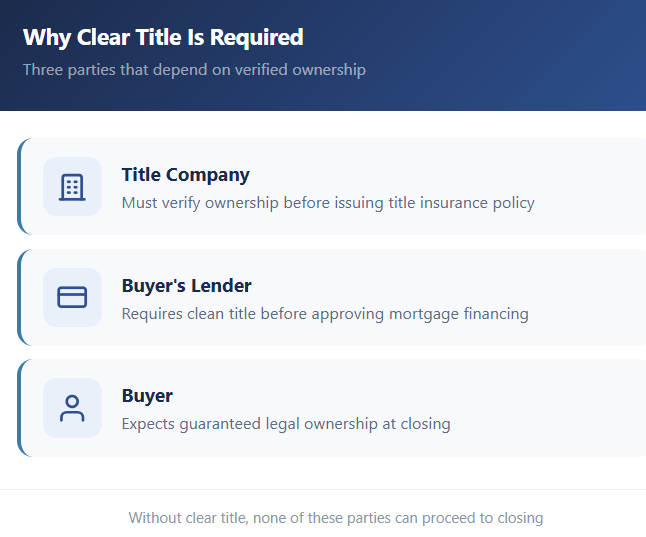
Oregon title companies will not issue title insurance unless the property has a clear title. Title insurance protects both the buyer and lender from future claims against the property. Without it, most transactions cannot close.
Lenders require clean title before approving a mortgage. If a buyer is financing the purchase, the lender must confirm that no prior claims take priority over their new lien. This is standard practice in Oregon and across the United States.
Buyers also expect to receive full legal ownership at closing. A title with unresolved issues puts the buyer at risk of losing the property or facing future legal costs. Clear title protects both parties in the transaction.
Common Reasons a Title May Not Be Clear
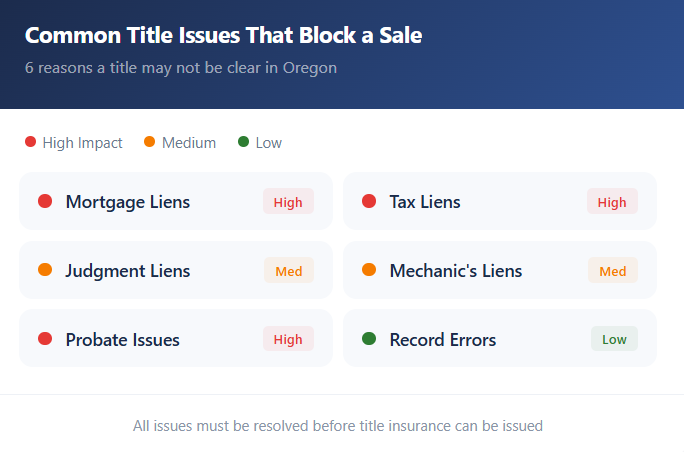
Several issues can create title defects that delay or prevent a home sale. The most common include:
- Mortgage liens — Remaining balances on existing home loans must be paid at or before closing. Learn more about how to handle mortgage and judgment liens when selling.
- Tax liens — Unpaid property taxes, federal income taxes, or state tax debts can result in liens recorded against the property. Understanding the types of liens that affect a home sale can help sellers prepare.
- Judgment liens — Court judgments for unpaid debts may attach to real property. These must be satisfied or negotiated before title can transfer. Sellers facing this situation may benefit from learning how to negotiate lien payoffs when selling a house.
- Mechanic’s liens — Contractors or subcontractors who were not paid for work on the property can file mechanic’s liens. Oregon law allows these claims to be recorded within a specific timeframe after work is completed.
- Probate ownership issues — When a homeowner passes away, title may not transfer automatically. Legal proceedings may be required to establish who has authority to sell.
- Errors in public records — Clerical mistakes, incorrect legal descriptions, or improperly recorded documents can cloud a title. These errors may require corrective filings to resolve.
For a broader overview, see this guide on whether you can sell a house with liens in Oregon and the legal steps to sell a house with liens.
What If the Property Is in Probate?
When a property owner dies, the estate typically must go through probate before the home can be sold. During probate, the court determines legal ownership and grants authority to the personal representative to manage estate assets.
Title cannot transfer until a personal representative or executor has been legally appointed. In some cases, court approval of the sale itself may be required. Until legal authority is confirmed, title companies will not issue insurance or allow closing.
If you are navigating this process, these resources may help:
- What is probate property?
- Who owns a house during probate?
- Can property be transferred without probate?
Can You Fix Title Problems Before Selling?
Most title issues can be resolved before or during the sale process. Common approaches include:
- Paying off liens — Outstanding mortgage balances, tax liens, and judgment liens can often be paid directly. In many transactions, liens are paid from sale proceeds at closing. Sellers can review options for how to remove liens before selling a house.
- Negotiating settlements — Lienholders may accept a reduced payoff amount, especially when the lien exceeds the property’s equity. This process typically requires written agreement from the lienholder.
- Filing corrective deeds — Errors in ownership records, misspelled names, or incorrect legal descriptions can be corrected through quitclaim deeds or corrective warranty deeds filed with the county.
- Court actions — In more complex cases, a quiet title action may be necessary. This legal proceeding asks the court to determine the rightful owner and remove competing claims.
- Clearing record errors — Working with the county recorder’s office or a title company can resolve clerical mistakes in public records.
The time required to fix title problems depends on the type and complexity of the issue. Simple lien payoffs may be resolved in days, while court actions can take several months.
Can a Cash Sale Happen Without Clear Title?
Cash buyers may be more willing to work with sellers who have title complications. Because cash buyers do not rely on lender requirements, there is more flexibility in how and when title issues are addressed.
However, title must still be cleared before the final transfer of ownership can occur. Even in a cash transaction, the title company must confirm that all liens and claims have been resolved before issuing a title insurance policy and recording the deed.
In some cases, the buyer and seller agree that sale proceeds will be used to pay off existing liens at closing. This allows the seller to resolve title issues without needing to come up with funds in advance.
Some Oregon-based direct buyers, such as OR Home Buyers, work with sellers who have title complications and coordinate lien resolution as part of the closing process.
Bottom Line
Clear title is required for most home sales in Oregon. Without it, title companies will not issue insurance, lenders will not approve financing, and buyers cannot receive guaranteed ownership.
Liens, ownership disputes, and probate complications are among the most common title issues sellers face. While these problems can delay a sale, most are resolvable through payoffs, negotiations, corrective filings, or court proceedings.
Sellers who identify title issues early have more time and options to resolve them before listing. Working with a title company or real estate attorney can help clarify what steps are needed and how long the process may take.
Frequently Asked Questions
What happens if a lien is discovered before closing?
The lien must typically be resolved before the sale can close. In many cases, the lien is paid from the sale proceeds at the closing table. If the lien amount exceeds available equity, the seller may need to negotiate a reduced payoff with the lienholder.
How do I check if my title is clear?
You can request a preliminary title report from a title company. This report identifies any liens, encumbrances, or ownership issues currently recorded against the property. In Oregon, title companies conduct this search as a standard part of the closing process.
Can I sell my house if my name isn’t on the deed?
Generally, no. Only individuals listed on the deed or those with legal authority, such as a personal representative in probate or a power of attorney holder, can authorize a sale. If your name is not on the deed, you may need to file corrective documents or obtain a court order.
How long does it take to clear title in Oregon?
Timelines vary depending on the issue. Simple lien payoffs may be resolved within a few days. Probate proceedings, quiet title actions, or complex disputes can take several weeks to several months. Working with a title company early in the process can help set realistic expectations.
Does title insurance guarantee clear ownership?
Title insurance does not guarantee that the title is clear. It protects the buyer and lender against financial loss if a covered title defect is discovered after closing. The title search conducted before issuing the policy is designed to identify and resolve known issues beforehand.

Hi, I’m Bob Bash, founder of OR Home Buyers, serving the Oregon community since 2017. We provide full-service real estate solutions, specializing in cash purchases for both residential and commercial properties. I started this business to help our community navigate difficult real estate situations with professionalism, ethics, and compassion.
My goal is simple: to make every client feel relieved and happy when their real estate challenges are resolved. Helping people find solutions and peace of mind is what drives me every day.