

Selling a dream home shouldn’t turn into a tax nightmare for unsuspecting homeowners. Many sellers face unexpected capital gains taxes that can significantly reduce their profits from home sales. Without proper knowledge of exemptions and tax rules, homeowners risk losing thousands of dollars in preventable taxes. Smart tax planning and understanding available exemptions can help preserve more of your hard-earned home sale profits.
The IRS allows singles to exclude up to $250,000 in capital gains from home sales, while married couples can exclude up to $500,000. These exemptions apply when homeowners have lived in the property as their primary residence for at least two out of the previous five years.
In this guide, we’ll explore every aspect of capital gains tax implications when selling your home.
Key Takeaways
- Capital gains tax applies to profits above the home’s purchase price, with exemptions up to $250,000 for singles and $500,000 for couples.
- To qualify for exemptions, homeowners must have lived in the house for at least 2 of the last 5 years as their primary residence.
- Proper documentation of purchase costs, improvements, and ownership duration is essential for accurate tax reporting and maximizing exemptions.
- Long-term gains (over one year) are taxed at lower rates (0%, 15%, or 20%), while short-term gains are taxed as ordinary income.
- State taxes vary; some, like Oregon, tax all capital gains as income, affecting overall tax liability upon sale.
What is Capital Gains Tax on Home Sales?

Capital gains tax applies to profits made from selling a home above its purchase price. The IRS allows tax exemptions of up to $250,000 for single homeowners and $500,000 for married couples filing jointly.
To qualify for these exemptions, homeowners must have lived in the house for at least 2 out of the last 5 years before selling.
The house must also be a primary residence. Beyond these limits, homeowners pay standard capital gains rates based on their tax bracket.
Most sellers can avoid this tax through careful timing and proper documentation. Regular tax planning helps maximize available exemptions.
How to Calculate Your Capital Gains Tax?
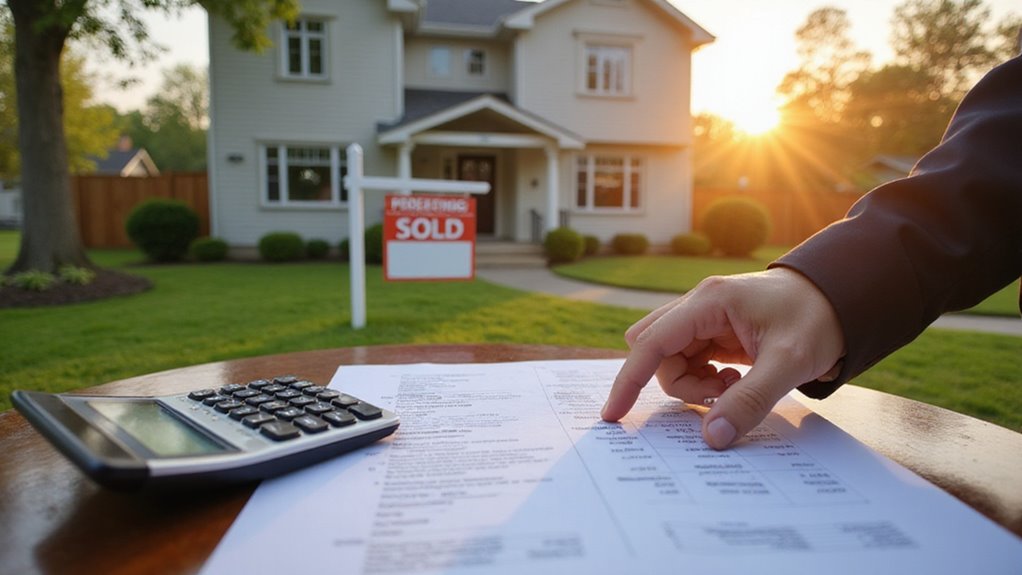
To calculate your capital gains tax, start by determining your tax basis, which includes your original purchase price plus any improvements.
Next, subtract this basis from your sale price to find your gain or loss. Finally, apply the applicable tax rates to your gain to understand your tax liability.
Determining Your Tax Basis
Calculate your original purchase price plus the cost of all property improvements. Your tax basis equals your home’s purchase price plus eligible capital improvements like new roofs or room additions.
Major repairs and renovations that extend your property’s life or add value qualify as improvements. Documentation of these costs through receipts and contracts proves essential.
Beyond these basics, certain settlement fees and closing costs from your original purchase can increase your tax basis. Records of these expenses serve as valuable proof for future tax calculations.
The final tax basis helps determine capital gains tax when you sell your property. A correct calculation reduces your tax burden. This knowledge protects your financial interests during real estate transactions.
Calculating Your Gain or Loss
A home sale gain or loss equals the difference between your sale price and tax basis. Your tax basis includes the original purchase price plus the cost of improvements made over time.
Subtracting this basis from your sale price reveals whether you made money or lost money. A higher sale price means a gain, while a lower price results in a loss.
Moreover, capital gains taxes apply to your profit unless you meet specific exemptions. Accurate records of improvements and purchase costs help reduce your tax burden. Clear documentation ensures you pay the correct amount of tax.
Applicable Tax Rates for Home Sales
Tax rates for home sales depend on your holding period and income level. Short-term gains from homes owned less than one year face ordinary income tax rates between 10% and 37%.
Long-term gains from properties held over one year qualify for reduced rates of 0%, 15%, or 20%. The IRS allows single homeowners to exclude up to $250,000 in gains, while married couples can exclude up to $500,000.
Furthermore, owners must meet specific ownership and use requirements. The property must serve as your primary residence for at least two of the five years before sale. These exclusions can apply once every two years.
Do You Qualify for Tax Exemptions?

If you’re selling your primary residence, you might qualify for significant tax exemptions, but you need to meet specific requirements.
You must have owned and lived in the home for at least two of the last five years to claim the $250,000 or $500,000 exclusion. Understanding the partial exemption rules is crucial to maximize your savings and avoid unnecessary taxes.
Primary Residence Requirements
A home must serve as your main residence for at least two out of the five years before sale. This requirement applies to the tax exclusion benefit on capital gains. Single filers can exclude up to $250,000, while married couples filing jointly can exclude up to $500,000.
Additionally, you must prove ownership during this period through documentation. Legal records, utility bills, and tax returns help establish your residency status. As a result, proper documentation ensures smooth qualification for tax benefits.
The $250,000/$500,000 Exclusion Rule
The exclusion rule lets homeowners avoid capital gains tax when selling their primary residence. Single homeowners can exclude up to $250,000 in gains from taxation.
Married couples filing jointly may exclude up to $500,000. These benefits apply only to a primary residence owned and lived in for at least 2 of the past 5 years.
Furthermore, this tax break remains available once every two years. Smart homeowners document their ownership timeline and living arrangements carefully. The savings can amount to substantial tax reductions on profitable home sales.
Partial Exemption Qualifications
A partial tax exemption applies when homeowners meet some but not all standard residence requirements. The IRS allows partial exemptions for homes owned under two years due to job changes, health issues, or unexpected circumstances.
Military service members and disaster victims can also claim this benefit regardless of their ownership duration. A valid reason must exist for selling before the standard two-year mark.
Moreover, the property must serve as a primary residence during part of the ownership term. This provision helps reduce tax burden when life changes force an early home sale.
How to Reduce Your Capital Gains Tax?

To lower your capital gains tax, start by tracking all home improvements, as they increase your tax basis and reduce gains. Consider strategies like a 1031 exchange if you’re reinvesting in other properties, or tax loss harvesting to offset gains elsewhere. Timing your sale carefully can also make a significant difference in minimizing your tax liability.
Tracking Home Improvements
Home improvements must be tracked through careful documentation and record-keeping. A well-documented history helps reduce future capital gains taxes on your property.
Your home’s tax basis increases with major renovations, room additions, system upgrades, and significant repairs. Keep receipts, contracts, and photos of all improvements. These records serve as proof when calculating capital gains.
Save documentation for kitchen remodels, bathroom updates, new roofing, and energy-efficient installations. The IRS allows these improvements to offset taxable gains when you sell your property. Most importantly, organized records protect your investment and simplify tax reporting.
1031 Exchange for Investment Properties
A 1031 exchange lets property investors defer capital gains taxes by swapping one investment property for another. The IRS requires investors to identify a replacement property within 45 days of selling the original property. The entire exchange must be completed within 180 days.
Properties must be of “like-kind” and held for business or investment purposes to qualify. A qualified intermediary must handle the transaction funds. The intermediary ensures compliance with exchange rules.
After careful planning, investors can grow their portfolios while keeping more capital invested. Most real estate types work well for exchanges, from apartments to office buildings.
Tax Loss Harvesting Strategies
Tax loss harvesting reduces your capital gains tax burden through strategic investment sales at a loss. You can offset up to $3,000 in ordinary income per year through investment losses.
The IRS allows you to carry forward additional losses to future tax years. Smart investors match losing positions against profitable ones to minimize their tax obligations.
Each sale requires careful documentation of purchase dates, costs, and sale prices for tax reporting. The proceeds should go back into similar but not identical investments. This strategy maintains your portfolio balance while capturing tax benefits.
Timing Your Home Sale
The best time to sell your home is after you’ve owned it for at least two years. You must live in the property for two of the past five years to qualify for capital gains tax exemptions. The IRS allows up to $250,000 in tax-free profit for single owners and $500,000 for married couples.
Spring and early summer months typically offer the most favorable market conditions. Houses tend to sell faster and at higher prices during this peak season.
More buyers actively search during warmer weather. Beyond tax considerations, the ideal timing also depends on local market trends and personal circumstances.
Monitor neighborhood sales patterns and interest rates. A real estate agent professional can help analyze these factors for optimal results.
What Special Situations Affect Capital Gains Tax?

Certain situations, like inheriting property, divorce transfers, or selling a home after a short ownership period, can significantly impact your capital gains tax.
Understanding how these scenarios alter your basis or exemptions is crucial for accurate tax planning. Act quickly to evaluate your circumstances and minimize significant liabilities.
Inherited Property Considerations
Key Tax Considerations for Inherited Property A stepped-up basis applies to inherited property, which reduces your tax burden. The property’s value resets to its fair market value on the date of inheritance. This adjustment helps minimize capital gains taxes when you sell.
Each state follows different rules for inheritance and property taxation. Accurate records of the stepped-up basis prevent future tax complications. The property’s location affects your tax obligations. Keep detailed documentation of the inheritance date and property value.
Quick sales after inheritance typically result in lower capital gains tax liability. Property values often increase over time, which may lead to larger future gains.
Divorce and Property Transfers
Spouses can transfer property without paying capital gains tax during a divorce. The IRS considers these transfers non-taxable under Internal Revenue Code Section 1041. The tax basis carries over from the original owner to the receiving spouse.
After divorce, any property sale may trigger capital gains tax for the new owner. Former spouses must complete property transfers within one year after the divorce decree. Careful timing helps preserve valuable tax benefits.
Property transfers to non-spouses will result in immediate capital gains tax liability. As a result, divorcing couples should consult tax professionals before making property decisions.
Selling After a Short Ownership Period
A sale shortly after purchase can lead to significant financial impacts through higher taxes and limited exemptions. Short-term property sales within one year face taxes at standard income rates rather than capital gains rates.
The IRS requires a two-year ownership period to qualify for primary residence tax benefits. Your profits may take a bigger hit without meeting these timeframes.
Moreover, quick sales raise red flags with lenders and future buyers. The property’s history becomes more challenging to explain. However, documented life changes like job relocation or medical issues can help justify an early sale.
How Do State Taxes Impact Your Home Sale?
State taxes can significantly affect your home sale profits, especially in states like Oregon with specific capital gains rules. You need to understand state-specific exemptions and deductions to accurately assess your tax liability. Ignoring these details could mean missing out on savings or facing unexpected tax bills.
Oregon Capital Gains Tax Rules
Oregon taxes all capital gains at your regular income tax rate, which ranges from 4.75% to 9.9%. The state offers no special rates or treatment for capital gains from home sales.
Even when federal exemptions apply, Oregon may still tax your profits. Primary residence sellers must verify at least two years of occupancy to qualify for any state-level exclusions.
Your residency status and timing of the sale matter significantly. Non-residents must pay Oregon taxes on gains from property located within the state.
The tax rules affect financial planning for homeowners looking to sell. Smart timing and proper documentation help minimize tax impacts.
State-Specific Exemptions and Deductions
Each state has its own unique tax rules for home sales beyond federal regulations. States like California offer additional exemptions up to $250,000 on primary residences.
Individual states may provide special deductions for property taxes, mortgage interest, and home improvements. To maximize tax benefits, homeowners must check their specific state guidelines.
Local tax authorities often require different documentation and filing deadlines than federal returns. A tax professional familiar with state regulations can help identify all eligible deductions.
Ready to Sell Your House Without Tax Headaches?
Understanding capital gains tax implications is crucial when selling your home in Oregon’s housing market. We at OR Home Buyers help homeowners navigate these tax considerations effectively. Our team serves communities across Eugene, Springfield, and Cottage Grove with professional home buying solutions.
If you’re planning to sell your house in Junction City or Albany, we can guide you through the tax exemption process. Our direct buying approach eliminates many common tax complications that arise during traditional sales. We understand local and state tax regulations that affect homeowners in our service areas.
As experienced home buyers in Oregon, we provide straightforward solutions for property owners concerned about tax implications. Our team can help determine if your property qualifies for capital gains exemptions. We assist homeowners throughout Eugene and nearby communities in making informed decisions about their home sales.

Hi, I’m Bob Bash, founder of OR Home Buyers, serving the Oregon community since 2017. We provide full-service real estate solutions, specializing in cash purchases for both residential and commercial properties. I started this business to help our community navigate difficult real estate situations with professionalism, ethics, and compassion.
My goal is simple: to make every client feel relieved and happy when their real estate challenges are resolved. Helping people find solutions and peace of mind is what drives me every day.