

Selling a dream home shouldn’t turn into a tax nightmare, yet many homeowners face this reality. Property sellers often struggle with complex capital gains calculations, transfer taxes, and local levies eating into profits. Without proper knowledge and planning, these tax implications can significantly reduce the returns from what should be a profitable sale. Smart tax strategies and available exemptions can help homeowners keep more money in their pockets.
The IRS allows single homeowners to exclude up to $250,000 in capital gains from their home sale. Married couples filing jointly can exclude up to $500,000 if they meet specific residency requirements.
This comprehensive guide will explore everything about taxes, exemptions, and strategies when selling your house.
Key Takeaways
- Capital gains tax rates depend on income, ownership duration, and can be excluded up to $250,000 or $500,000 for qualifying homeowners.
- Proper documentation of home improvements and selling costs can reduce taxable gains.
- Homeowners must meet residency requirements (living in the home at least 2 of 5 years) to qualify for tax exemptions.
- Local and state taxes, including transfer taxes and capital gains rates, vary and impact net proceeds from the sale.
- Reporting requirements involve specific IRS forms like Schedule D and Form 8949, especially if gains exceed exclusion limits.
What Taxes Apply When Selling Your House?

Three main taxes apply when you sell a house: capital gains tax, property transfer tax, and state income tax. Federal capital gains tax ranges from 0% to 20% based on your income level and ownership duration.
The IRS allows exclusions up to $250,000 for single filers and $500,000 for married couples filing jointly. Local governments often charge property transfer taxes during real estate transactions.
Moreover, state taxes vary by location. Some states exempt real estate transactions from transfer taxes, while others charge up to 2%. Your tax professional can help determine specific tax obligations for your situation.
How to Calculate Capital Gains Tax on Home Sales?

To calculate your capital gains tax, start by understanding your basis, which includes your original purchase price plus any improvements.
Subtract this basis from your sale price to find your profit, then determine your tax rate based on your income and filing status. Accurate calculations ensure you’re prepared for the tax implications of your home sale.
Understanding Basis and Sale Price
Basis equals your home’s purchase price plus improvements. Sale price is the amount you receive from the buyer minus selling costs. Your tax basis includes the original purchase cost and any capital improvements made over time.
The sale price must account for real estate commissions, legal fees, and other transaction costs. These calculations determine your final taxable gain.
As a result, careful documentation of home improvements helps reduce your tax burden. Smart record-keeping of receipts and contracts validates your adjusted basis claims.
Calculating Your Profit
Your profit equals the sale price minus your adjusted basis (purchase price plus improvements). The accurate math starts with your home’s original cost.
Add capital improvements, insurance, and property taxes to determine your adjusted basis. Next, subtract agent commissions, repair costs, and closing fees from your final sale amount.
To stay organized, save all receipts and documents. Proper calculations matter for tax planning. Most homeowners can exclude up to $250,000 in profit from capital gains tax. This tax break doubles for married couples filing jointly.
Determining Your Tax Rate
Tax rates vary based on your total yearly income and filing status. For single filers, long-term capital gains rates follow three tiers: 0% on income up to $44,625, 15% for $44,626 to $492,300, and 20% above $492,300.
Short-term gains face higher ordinary income tax rates. Furthermore, your tax obligations depend on how long you keep the investment. Smart investors often wait beyond one year to qualify for lower long-term rates. This approach typically results in significant tax savings.
Do You Qualify for Capital Gains Tax Exemptions?

To qualify for capital gains tax exemptions, your home must meet specific ownership and residence requirements. You need to have lived there for at least two of the past five years and meet the $250,000/$500,000 exclusion limits. Ensuring you pass the ownership and use tests is key to maximizing your tax benefits when selling.
Primary Residence Requirements
Primary residence requirements are specific rules for homeowners to qualify for tax benefits. A homeowner must live in their house for at least 24 months during the past five years. The IRS considers this property a primary residence during this timeframe.
Documentation like utility bills, voter registration, and tax returns proves primary residence status. Moreover, homeowners can’t claim multiple properties as primary residences at once.
Following these guidelines allows access to valuable capital gains tax exclusions. The tax benefit lets single owners exclude up to $250,000 in profits, while married couples can exclude $500,000.
The $250,000/$500,000 Exclusion Rule
Single homeowners can exclude up to $250,000 in capital gains from home sales. Married couples filing jointly can exclude up to $500,000. The tax exclusion applies to primary residences only.
Homeowners must live in the house for at least two out of the previous five years to qualify. This valuable tax benefit helps reduce financial burdens when moving. Moreover, there are no age restrictions for this exclusion.
The IRS allows taxpayers to use this benefit multiple times throughout their lives. However, they must wait at least two years between claims.
Ownership and Use Tests
The ownership and use tests determine if you qualify for tax exclusions on your home sale. You must own and live in your home for at least two years to pass these crucial tests.
The IRS requires you to use the property as your main residence for two out of the previous five years. Each spouse can meet these requirements separately for married couples.
In addition, the tax law prevents homeowners from claiming this exclusion more than once every two years. This rule applies regardless of your filing status or property location.
When Must You Report Your Home Sale to the IRS?
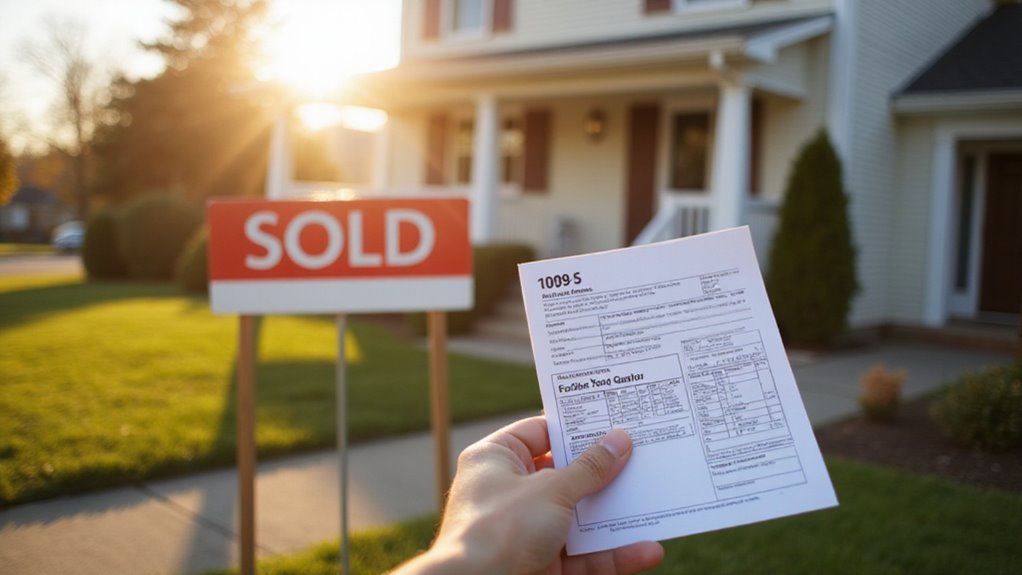
You must report your home sale to the IRS in specific situations. The IRS requires reporting when profits exceed $250,000 for single filers or $500,000 for married couples filing jointly.
Any sale of investment property needs reporting, regardless of profit or loss. Regular homeowners don’t need to report their primary residence sale unless gains surpass these limits.
Moreover, sellers who don’t qualify for exclusions must report their sale using Schedule D or Form 8949. This ensures proper tax compliance and helps avoid future IRS complications.
How to Reduce Your Tax Burden When Selling?

To lower your tax bill when selling, focus on maximizing deductions like home improvements and selling costs. Consider the strategic timing of your sale to reduce gains, and investigate options like a 1031 exchange if applicable. These approaches can significantly cut your taxable profit and boost your net proceeds.
Home Improvement Deductions
Home improvement expenses can qualify for tax deductions when you sell your house. Major upgrades and renovations increase your property’s cost basis, which reduces taxable capital gains.
The IRS allows deductions for improvements that add value, extend useful life, or adapt your home to new uses. Common qualifying projects include kitchen remodels, bathroom updates, and new roofing.
You must save all receipts and documents for tax purposes. Each improvement should be permanent and enhance the property’s value.
Proper records can decrease your capital gains tax burden by thousands of dollars at sale time. Smart improvements protect both your investment and future tax position.
Selling Costs Considerations
Selling costs reduce your taxable gains on a property sale. Real estate commissions typically range from 5% to 6% of the sale price. Common deductible expenses include agent fees, legal costs, transfer taxes, and repair expenses.
Smart record-keeping maximizes tax benefits from these deductions. A spreadsheet or digital folder helps track all sale-related expenses. Documentation proves your claims during tax season.
Your tax advisor can confirm which specific costs qualify in your situation. Each state has unique rules about deductible selling expenses. As a result, local expertise ensures proper tax treatment of your sale.
1031 Exchange Options
Three main 1031 exchange options exist for investment property owners: A simultaneous exchange transfers one property directly for another on the same day.
A delayed exchange gives investors 45 days to identify replacement property and 180 days to complete the purchase. A reverse exchange lets buyers acquire new property before selling the old one.
To succeed with any option, investors must work with qualified intermediaries. The rules require equal or greater value in replacement properties. These strategies help preserve wealth through tax deferral.
Strategic Timing of Your Sale
The best time to sell a property is when you qualify for tax benefits and market conditions align with your goals. A homeowner must live in their primary residence for 2 out of 5 years to claim capital gains exemptions. The right timing can reduce your tax burden significantly. A strategic sale during a lower-income year leads to fewer taxes.
Moreover, market conditions affect your potential returns. Spring and early summer bring more buyers and competitive offers. Professional guidance ensures you select the most advantageous time for your financial situation.
What Tax Forms Do You Need for Home Sales?
The main tax forms needed for home sales are Form 1040 and Schedule D. IRS Form 1040 serves as your primary tax return document for reporting home sale profits.
Schedule D must be attached to calculate any capital gains tax. Form 1099-S becomes necessary if you received a closing statement from the sale.
For complex transactions, additional paperwork may apply. Form 8949 helps document detailed sales information. Special schedules are required when the property had business use or claimed depreciation. The right forms protect you from IRS scrutiny.
How Do State and Local Taxes Affect Your Sale?
State and local taxes can significantly impact your net proceeds from selling a home. While Oregon doesn’t impose property transfer taxes, county and city rates vary, affecting your costs.
Additionally, Oregon’s capital gains are taxed as income, so understanding these local and state-specific rules is essential for accurate planning.
Oregon Property Transfer Taxes
Oregon’s primary property transfer tax exists only at the local level, not statewide. Washington County charges a 0.1% transfer tax on property sales.
The city of Portland levies a 1% transfer tax on properties sold above $500,000. Most Oregon counties and cities don’t impose any transfer fees.
Local tax rates and rules vary between jurisdictions. A real estate professional can verify current transfer taxes in your area. Buyers and sellers must account for any applicable local transfer taxes during closing cost calculations.
For smooth transactions, research your local tax obligations early. Your title company will detail transfer taxes in the final settlement statement.
County and City Tax Variations
Tax rates differ between counties and cities, affecting your property costs and sale profits. Each jurisdiction sets its own real estate transaction fees and annual property tax rates.
Local governments may charge between 0.5% to 2.5% for property transfers. These variations impact both buyers and sellers in the market. Smart planning requires knowledge of specific local tax rules. Oregon lacks a state transfer tax, but cities can add their own fees.
Understanding local tax differences helps reduce overall costs. A thorough review of area-specific rates ensures accurate budget planning. Therefore, research your local tax structure before any real estate transaction.
State Income Tax Considerations
State income taxes significantly affect home sale profits in Oregon. Oregon taxes capital gains from home sales at rates between 4.75% and 9.9%, based on your income bracket. Proper tax planning helps minimize these costs and maximize your returns.
The state allows certain exemptions that can reduce your total tax burden. Most homeowners qualify for tax breaks through primary residence exemptions and improvements deductions.
Federal law permits exclusions up to $250,000 for single filers and $500,000 for married couples filing jointly. Furthermore, documentation of home improvements and maintenance costs provides valuable deductions. Consider consulting a tax professional to optimize your specific situation.
Conclusion
Understanding tax implications can significantly impact your home sale profits in Oregon. We at OR Home Buyers help homeowners navigate these complex tax situations. Our team works with sellers across Eugene and Springfield to maximize their returns through strategic planning.
We regularly assist homeowners in Cottage Grove, Albany, and Salem with their property tax considerations. Our expertise includes capital gains exemptions and various tax planning strategies for home sellers. We stay current with local and federal tax regulations to better serve our clients.
If you’re considering selling your property in the Eugene area, we can help you make informed decisions. Our professional team at OR Home Buyers understands the local market dynamics and tax implications. We provide straightforward solutions to homeowners looking to sell while managing their tax obligations effectively.