
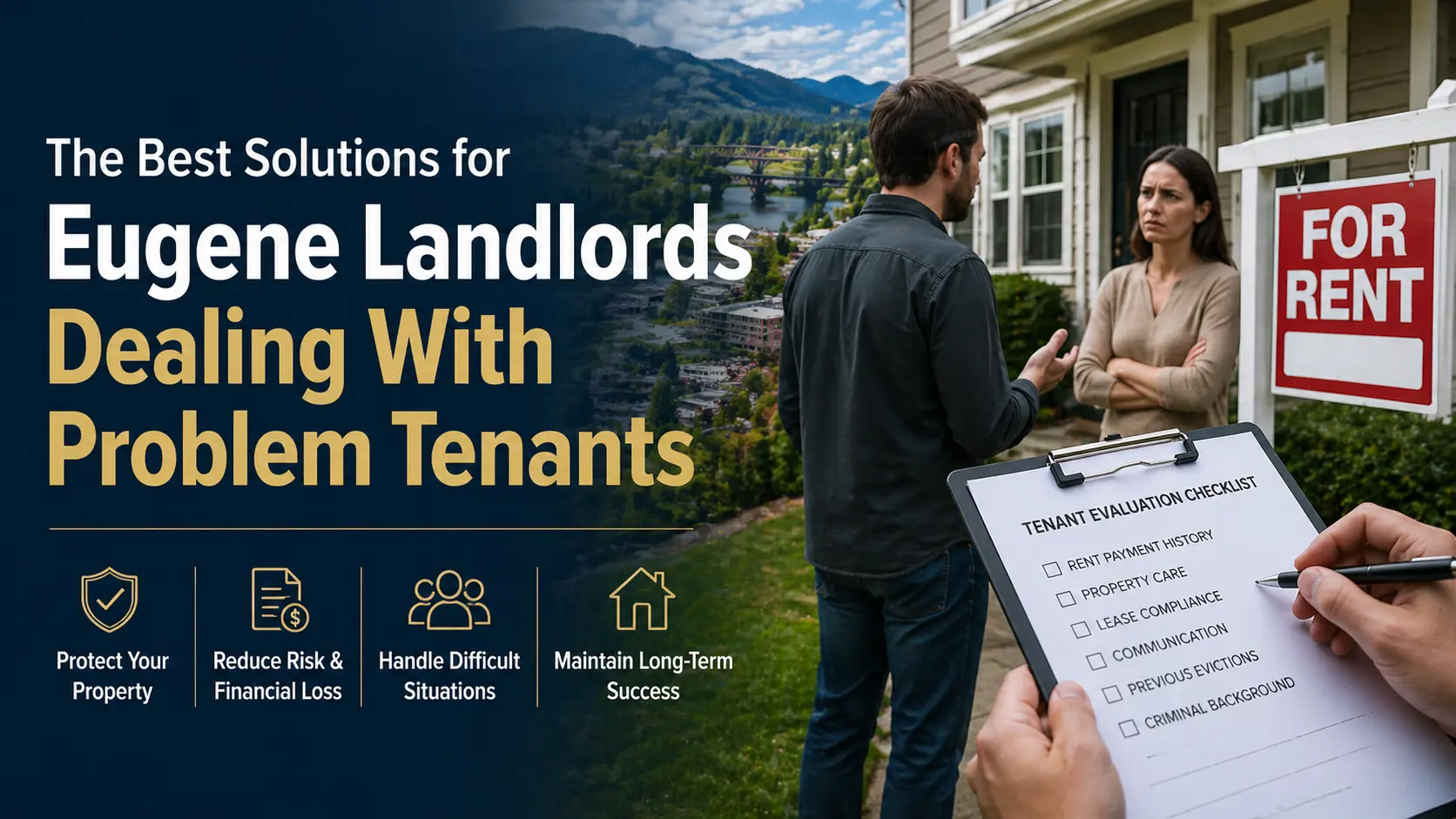
Eugene landlords often face issues like unpaid rent, lease violations, or property damage that can disrupt income and create legal complications. Several solutions exist, including negotiation, formal eviction, lease adjustments, and selling the property to an investor or cash buyer. The right choice depends on the urgency of the situation, available finances, the tenant relationship, and long-term goals for the rental property.
What Are the Most Common Problems Landlords Face With Tenants?
Landlord-tenant problems usually fall into a handful of recurring categories. Each carries different financial and legal implications, and the appropriate response depends on severity and how long the issue has continued.
The most common issues include:
- Non-payment of rent, which is the leading cause of formal eviction filings
- Property damage beyond normal wear and tear
- Lease violations such as unauthorized occupants, pets, or subletting
- Eviction resistance, including refusal to vacate after notices are served
- Legal disputes involving habitability, security deposits, or retaliation claims
In most cases, problems escalate slowly. A single late payment or minor lease breach can often be resolved through communication. Repeated or serious violations typically require formal action.
Non-Payment of Rent
Non-payment is one of the most disruptive problems for small landlords. Even one or two missed payments can affect a property owner’s ability to cover the mortgage, taxes, and insurance.
In Oregon, landlords must follow specific notice procedures before pursuing eviction for nonpayment. Skipping or rushing these steps can delay the process further or result in a dismissed case.
Property Damage
Property damage beyond normal wear and tear may include broken fixtures, holes in walls, water damage caused by neglect, or pet-related destruction. Documenting damage with photos, written notes, and inspection reports is essential before deducting from a security deposit or pursuing legal claims.
Lease Violations
Lease violations can range from minor to serious. Unauthorized pets, additional occupants, smoking inside the unit, or running a business from the property are common examples. Some violations can be cured by the tenant within a notice period, while others may justify termination.
Eviction Resistance and Legal Disputes
Some tenants refuse to leave even after a valid notice. Others file counterclaims alleging habitability problems, retaliation, or discrimination. These situations often require legal representation and can extend the timeline considerably.
What Are Your Legal Options as a Landlord in Oregon?
Oregon landlords have clear legal pathways for handling problem tenants, but the process is governed by strict procedural rules. Failing to follow these rules can result in dismissed cases and additional delays.
The eviction process in Oregon, called a Forcible Entry and Detainer (FED) action, generally begins with a written notice. The notice period varies based on the reason: typically 72 or 144 hours for nonpayment, 30 days for certain lease violations, and 90 days for no-cause terminations in some circumstances.
Tenants in Oregon have substantial rights. These include the right to habitable housing, protection from retaliation, limits on rent increases under statewide rent control, and protections against certain no-cause terminations after the first year of tenancy.
Legal timelines vary. A straightforward nonpayment eviction may resolve in three to six weeks if uncontested. Contested cases, those involving counterclaims, or evictions of tenants with active defenses can stretch much longer.
Before pursuing legal action, many landlords consult with a real estate attorney to confirm whether their notices, lease terms, and documentation are legally sound. For more detail on when legal counsel may be appropriate, see this guide on whether you need a real estate attorney in Oregon.
Solution #1: Attempt Negotiation or Cash-for-Keys Agreements
Negotiation is often the fastest and least expensive way to resolve a tenant problem. A cash-for-keys agreement is a written arrangement in which the landlord pays the tenant a set amount to vacate the property voluntarily by an agreed date.
This approach can be useful when:
- The tenant is unlikely to pay back rent owed
- A formal eviction would take longer than the landlord can afford to wait
- The landlord wants to avoid court costs and attorney fees
- The tenant is open to leaving but needs financial help to relocate
A typical cash-for-keys payment might range from a few hundred to several thousand dollars, depending on the local rental market, the tenant’s situation, and how quickly the landlord needs the unit returned. The agreement should be in writing and signed by both parties, and it should include a firm move-out date and a release of claims.
Benefits of negotiation include faster resolution, reduced legal expenses, and a lower risk of property damage during a contested move-out. The drawback is that not every tenant will accept, and some may use the offer to delay further.
Solution #2: File for Eviction (When Necessary)
Eviction becomes necessary when negotiation fails or when the tenant’s behavior poses a serious threat to the property or other occupants. Oregon’s eviction process is procedural and time-sensitive, so accuracy matters at every step.
The general steps include:
- Serve a proper written notice that matches the legal grounds for eviction
- Wait the full notice period before filing in court
- File a Forcible Entry and Detainer (FED) complaint in the county where the property is located
- Attend the first appearance and any scheduled trial
- Obtain a judgment and writ of execution if the tenant is found liable
- Coordinate with the county sheriff for physical removal if the tenant still refuses to leave
Costs typically include filing fees, service fees, attorney fees if represented, and lost rent during the process. Total out-of-pocket expense for a contested eviction can reach several thousand dollars.
Time investment is also significant. Even a smooth eviction can take a month or more. Contested cases or tenants with strong defenses can push the timeline to several months.
Solution #3: Continue Renting With Adjustments
Some landlords choose to keep the rental property but adjust how they manage it. This approach works best when the current problem is isolated, the property is otherwise profitable, and the landlord has the time and resources to make improvements.
Common adjustments include:
- Stricter tenant screening, including credit, income, eviction history, and reference checks
- Updated lease agreements with clearer language on rent due dates, late fees, pet policies, and maintenance responsibilities
- Higher security deposits within Oregon’s legal limits
- Hiring a professional property manager to handle screening, rent collection, and compliance
- Adding required renter’s insurance to reduce liability exposure
Strong screening is the single most effective way to reduce future problems. A property manager can also serve as a buffer, handling routine disputes and ensuring all notices comply with Oregon law.
This solution requires patience and capital. It does not solve an existing tenant problem, but it can prevent recurrence after the unit is turned over.
Solution #4: Sell the Property With Tenants in Place
Selling a rental property with tenants still living in it is a legal and common option in Oregon. Many investors actively look for occupied rentals because they offer immediate cash flow and avoid the cost of finding new tenants.
When selling tenant-occupied properties, the existing lease usually transfers to the new owner. Month-to-month tenants may also remain, though Oregon’s notice rules apply to any post-sale changes the new owner wants to make.
Advantages of selling with tenants in place:
- Continued rental income during the listing period
- Appeal to investor buyers who want a turnkey investment
- No need to evict before sale
- Lower marketing costs in some cases
Challenges to consider:
- A smaller buyer pool, since most owner-occupant buyers want vacant properties
- Showings can be limited by tenant cooperation and Oregon’s notice requirements for entry
- Problem tenants can affect the property’s perceived value
- Disclosure of any known issues, including lease disputes, may be required
Real estate contracts in these sales often include specific terms addressing the tenancy. Buyers may request contingencies covering lease review, tenant interviews, or rent verification. To understand how these contract conditions work, see this overview of contingencies in a real estate contract.
Solution #5: Sell the Property Quickly to a Cash Buyer
Selling to a cash buyer is often the fastest exit for landlords dealing with serious tenant issues, deferred maintenance, or financial pressure. Cash buyers, including local investors and home-buying companies, typically purchase properties as-is and close on a short timeline.
Typical features of cash sales include:
- No required repairs or staging
- No financing contingencies, since the buyer is not relying on a mortgage
- Closing in as little as one to three weeks
- Willingness to purchase tenant-occupied properties, including those with active disputes
- Reduced or no agent commissions in many cases
For landlords facing a long eviction process, a cash sale can effectively transfer the tenant situation to a buyer experienced in handling it. The trade-off is usually price. Cash offers tend to be below full retail market value because the buyer absorbs the risk, repair costs, and time investment.
Several local and national companies operate in the Eugene market. A list of providers can be found in this directory of companies that buy houses for cash in Eugene, which can help landlords compare options.
What Are the Financial Considerations When Dealing With Problem Tenants?
Problem tenants create direct and indirect costs that often exceed the unpaid rent itself. Understanding the full financial picture helps landlords compare solutions on equal terms.
Common financial impacts include:
- Lost rental income during nonpayment, eviction, or vacancy
- Repair costs for damage caused by the tenant
- Legal fees, court filing fees, and service costs
- Holding costs such as mortgage payments, property taxes, insurance, and utilities
- Property management fees if professional help is hired
- Tax implications related to capital gains or depreciation recapture if the property is sold
A simple way to estimate the impact is to add up monthly holding costs, multiply by the expected resolution timeline, and add legal and repair estimates. The total often surprises landlords and changes the calculation between fighting, fixing, or selling.
For long-term holding, even a few months of nonpayment combined with damage can wipe out a year of profit. For landlords near retirement, in financial distress, or owning out of state, the math frequently favors selling.
What Are the Legal and Disclosure Considerations When Selling?
Oregon sellers, including landlords, must comply with state disclosure laws when selling residential property. Disclosures protect buyers and reduce the seller’s exposure to post-sale claims.
The state’s Seller’s Property Disclosure Statement asks about a wide range of issues, including known defects, water damage, system conditions, lead paint, and legal disputes. Landlords selling tenant-occupied properties should also disclose known lease terms, security deposit amounts, and any active or pending disputes.
Transparency reduces legal risk. Buyers who later discover undisclosed material issues may pursue rescission, damages, or other remedies. Honest, written disclosure usually shifts the responsibility for known issues to the buyer once the sale closes.
For a deeper look at what landlords and other sellers need to disclose, see this explanation of seller disclosure requirements in Oregon.
How Does the Closing Process Work When Selling a Rental Property?
The closing process for a rental property is similar to a standard home sale, with added attention to tenant-related items. Most transactions in Oregon close through an escrow company or title company.
A typical closing timeline includes:
- Acceptance of the purchase agreement and opening of escrow
- Title search and review of any liens, judgments, or recorded leases
- Inspections, appraisals, and contingency removal, if applicable
- Lease and tenant document review by the buyer
- Final walk-through, sometimes coordinated with the tenant’s schedule
- Signing of closing documents and transfer of funds
- Recording of the deed with the county
Tenant-specific items handled at closing often include the prorated transfer of rent for the closing month, the assignment of security deposits to the new owner, and notification to the tenant of the change in ownership. Oregon law requires specific notices to tenants regarding new ownership and where rent should be paid.
Closing costs vary by transaction, but they generally include title insurance, recording fees, prorated taxes, and escrow fees. For a breakdown of who typically pays which fees, see this guide on escrow fees in Oregon.
How Does Earnest Money Affect Buyer Commitment in These Situations?
Earnest money is a deposit a buyer makes when entering into a purchase agreement, and it signals commitment to the transaction. For landlords selling problem properties, earnest money is one of the clearest indicators of buyer seriousness.
Earnest money in Oregon home sales typically ranges from one to three percent of the purchase price, though investor and cash transactions sometimes involve higher or lower amounts. The deposit is usually held in an escrow account and credited to the buyer at closing.
If the buyer backs out without a valid contractual reason, the seller may be entitled to retain the earnest money. This protects the seller from extended delays and lost market exposure. In tenant-occupied transactions, where time and certainty matter, a strong earnest money deposit reduces the risk of a deal falling apart.
For more detail on how this deposit works in cash transactions, see this overview of earnest money in a cash sale.
When Is Selling the Best Option for Landlords?
Selling becomes the most practical option when ongoing tenant issues outweigh the financial and emotional cost of holding the property. There is no single threshold, but several patterns commonly indicate it is time to sell.
Selling tends to make sense when:
- Tenant problems are recurring and not resolved by lease changes or property management
- The property requires significant repairs the landlord cannot fund
- Holding costs are eroding profit or causing financial strain
- The landlord is relocating, retiring, or experiencing burnout from property management
- Legal disputes are likely to extend for many months
- The property no longer fits the landlord’s long-term portfolio strategy
Landlord burnout is a real and frequently underestimated factor. Continuous problems with a single property can affect overall portfolio performance and personal well-being. For some owners, exiting the property is the most rational financial and personal decision.
How Do You Choose the Right Solution for Your Situation?
Choosing among the available solutions involves weighing four main factors: urgency, legal complexity, financial condition, and long-term goals. Each factor points toward different approaches.
Urgency matters most when nonpayment, damage, or safety issues threaten the property or other occupants. Faster solutions, such as cash-for-keys or a cash sale, may take priority over more profitable but slower options.
Legal complexity often determines whether legal counsel is needed and how predictable the outcome will be. Cases involving tenant defenses, habitability claims, or fair-housing issues are typically harder to resolve through self-help.
Financial condition shapes which options are realistic. Landlords with strong reserves can afford to wait out a contested eviction. Those facing mortgage delinquency, tax issues, or competing financial demands often benefit from a faster exit.
Long-term goals close the loop. A landlord planning to grow a rental portfolio may invest in better screening and management. A landlord ready to retire or simplify may prefer to sell, even at a discount.
A simple comparison can help frame the decision:
| Solution | Speed | Cost to Landlord | Best Suited For |
|---|---|---|---|
| Negotiation / Cash-for-Keys | Fast | Low to moderate | Tenants willing to leave |
| Formal Eviction | Slow | Moderate to high | Serious violations, no other option |
| Continue With Adjustments | Slow | Moderate | Profitable properties, minor recurring issues |
| Sell With Tenants in Place | Moderate | Low | Stable tenancy, investor buyer pool |
| Sell to a Cash Buyer | Fast | Lower price, low effort | Severe issues, urgency, deferred repairs |
Bottom Line
Landlords in Eugene have several options for resolving tenant problems, and no single solution fits every situation. Negotiation, formal eviction, improved property management, selling with tenants in place, and selling to a cash buyer all serve different needs.
Legal and financial factors usually determine which path is most realistic. Oregon’s tenant protections and procedural requirements make formal action time-consuming, while holding costs, repairs, and lost rent can quickly outweigh expected returns.
For landlords facing serious or repeated issues, selling can be a practical and final solution. The right choice depends on weighing urgency, finances, and long-term goals against the realistic outcome of each available option.
Frequently Asked Questions
What can landlords do about problem tenants in Oregon?
Oregon landlords can pursue negotiation, cash-for-keys agreements, formal eviction, or sale of the property to resolve tenant problems. The right option depends on the type of issue, the urgency, and the landlord’s financial situation. Each path has specific legal and procedural requirements under Oregon law.
How long does eviction take in Oregon?
A typical uncontested eviction in Oregon takes about three to six weeks from the initial notice through the final judgment. Contested cases, those involving counterclaims, or evictions delayed by court scheduling can take several months. Total time also depends on whether the tenant complies with the judgment voluntarily or requires sheriff enforcement.
Can you sell a rental property with tenants still living in it?
Yes, rental properties can be sold with tenants in place in Oregon. Existing leases generally transfer to the new owner, and month-to-month tenants remain subject to Oregon’s notice rules. The buyer pool is often limited to investors and other landlords rather than owner-occupants.
Is it better to evict or sell the property?
Evicting usually makes more sense when the property is otherwise profitable and the landlord plans to keep it long term. Selling is often more practical when tenant issues are severe, holding costs are high, or the landlord wants to exit ownership entirely. Comparing total estimated costs and time for each path usually reveals the better option for a specific situation.
Do cash buyers purchase tenant-occupied properties?
Many cash buyers purchase tenant-occupied properties, including those with active disputes or unpaid rent. Investor buyers often handle the tenant situation themselves after closing, which can save the seller time and legal costs. Offers on occupied properties are typically below retail market value to account for the added risk.
What legal steps should landlords follow before selling?
Landlords should review the existing lease, document tenant communications, prepare an accurate seller disclosure, and confirm any required notices to the tenant about the sale. Oregon law requires specific notices regarding new ownership and rent payment instructions after closing. Consulting a real estate attorney is often advisable when active disputes are involved.
Will selling the property automatically end the lease?
Selling does not automatically end an existing lease in Oregon. Fixed-term leases generally transfer to the new owner under the same terms, while month-to-month tenancies continue until properly terminated under state law. The buyer assumes the landlord’s obligations after closing.
How much does it cost to evict a tenant in Oregon?
Eviction costs in Oregon typically range from a few hundred dollars for an uncontested filing to several thousand dollars for contested cases involving attorney fees. Court filing fees, process server fees, and lost rent during the process add to the total. Many landlords also factor in repair and turnover costs after the unit is recovered.

Hi, I’m Bob Bash, founder of OR Home Buyers, serving the Oregon community since 2017. We provide full-service real estate solutions, specializing in cash purchases for both residential and commercial properties. I started this business to help our community navigate difficult real estate situations with professionalism, ethics, and compassion.
My goal is simple: to make every client feel relieved and happy when their real estate challenges are resolved. Helping people find solutions and peace of mind is what drives me every day.