

A lien is a legal claim placed against a property due to an unpaid debt. In Oregon, a lien gives the creditor a secured interest in your home, which typically must be resolved before you can sell or transfer ownership. Liens are identified during the title search process and can delay or prevent closing if left unaddressed. Understanding your options is the first step toward resolving the issue.
What Is a Property Lien?
A property lien is a legal right granted to a creditor over a piece of real estate. It exists because the property owner owes a debt that has not been paid. The lien attaches to the property itself, not just the individual who owes the money.
This distinction matters. Even if the property changes hands, the lien may remain unless it is formally resolved. In practical terms, a lien prevents the owner from transferring clear title to a buyer. Title companies in Oregon will flag any active liens during the closing process.
Liens can be voluntary or involuntary. A mortgage is a voluntary lien because the homeowner agrees to it. A tax lien or judgment lien is involuntary because it is placed on the property without the owner’s consent, usually as the result of unpaid obligations.
Common Types of Liens in Oregon
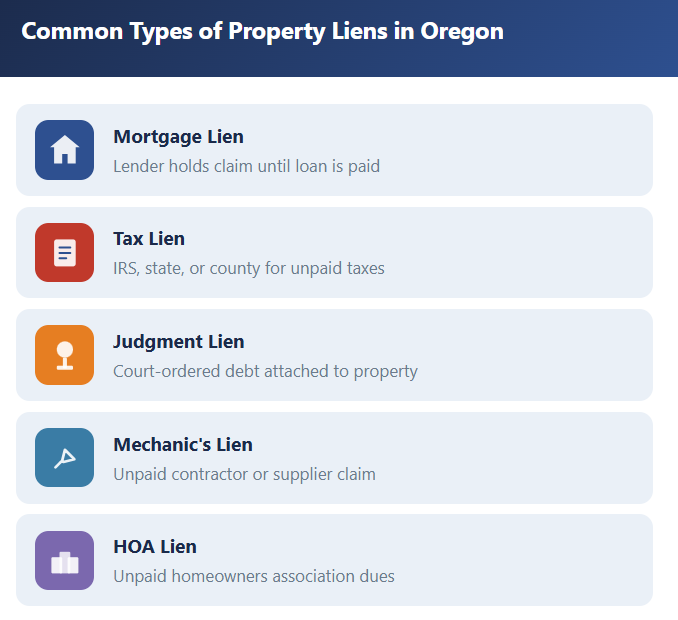
Oregon homeowners may encounter several types of liens. Each has different legal origins and resolution processes. Below are the most common:
- Mortgage liens — The most familiar type. Your mortgage lender holds a lien on the property until the loan is paid in full. This is a voluntary lien agreed to at the time of purchase or refinance.
- Tax liens — Placed by the IRS or Oregon Department of Revenue for unpaid federal or state taxes. County tax liens may also apply for unpaid property taxes. These liens take priority over most other claims.
- Judgment liens — Result from a court ruling against the property owner. If a creditor wins a lawsuit and the debt goes unpaid, the court may attach a lien to the debtor’s real property.
- Mechanic’s liens — Filed by contractors, subcontractors, or suppliers who performed work on the property but were not paid. Oregon law allows these claims under ORS Chapter 87.
- HOA liens — Homeowners association liens arise when a property owner fails to pay required HOA dues or assessments. These are common in planned communities and condominiums.
For a more detailed breakdown of each lien type and how it affects a home sale, see this guide on types of liens that affect a home sale.
How a Lien Affects Selling a House in Oregon
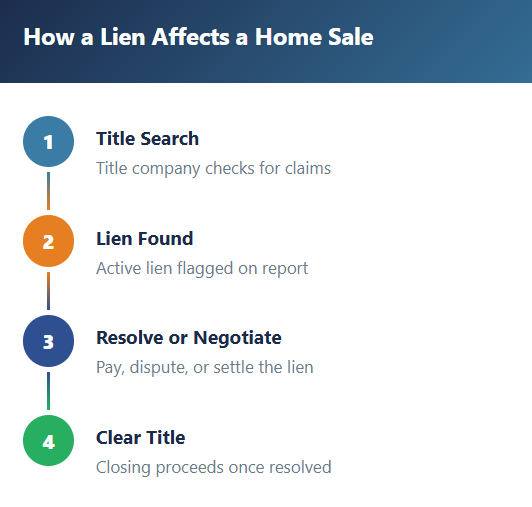
In most Oregon real estate transactions, the buyer expects to receive clear title. A lien directly interferes with that expectation.
During the closing process, a title company conducts a title search to identify any claims against the property. If a lien is found, it will appear on the title report. The buyer’s lender will typically require that the lien be resolved before funding the loan.
This can delay closing significantly. In some cases, it can cause a sale to fall through entirely. Sellers who are unaware of existing liens are often caught off guard during escrow.
There are several paths forward. Liens can sometimes be paid from the sale proceeds at closing, negotiated for a reduced amount, or formally disputed if inaccurate. The right approach depends on the lien type and amount.
Oregon sellers dealing with this situation may want to review the legal steps to sell a house with liens or learn more about how to remove liens before selling. For those managing both mortgage and judgment claims, this resource on handling mortgage and judgment liens when selling provides additional guidance.
A general overview of the process is also available at can you sell a house with liens in Oregon.
Can You Sell a House With a Lien in Oregon?
Yes, it is possible to sell a house with a lien in Oregon. However, the lien must generally be satisfied at or before the time of closing. In many cases, the lien amount is paid directly from the seller’s proceeds through the title company.
Some lien holders are open to negotiation, particularly if the lien amount exceeds the available equity or if the debt is old. In those situations, a creditor may accept a reduced payoff to avoid the cost and delay of legal enforcement.
Tax liens have their own set of rules. The IRS, for example, has specific procedures for subordination, discharge, or withdrawal of federal tax liens. Oregon state tax liens follow a different process through the Department of Revenue. Sellers with tax-related liens should review the specific steps for selling a house with a tax lien in Oregon.
Homeowners exploring a direct sale to a local buyer may find that this approach simplifies the lien resolution process. Companies that buy homes directly, such as OR Home Buyers, sometimes work with sellers to coordinate lien payoffs as part of the closing.
What If the Property Is in Probate and Has a Lien?
When a property owner passes away and leaves behind a home with an active lien, the estate is generally responsible for addressing it. The lien does not disappear upon the owner’s death. It remains attached to the property.
In Oregon, the personal representative of the estate must typically resolve or account for any liens before the property can be distributed to heirs or sold. Depending on the circumstances, court approval may be required to sell the property or negotiate lien payoffs during probate.
This process can be complex. For more detail on how probate works in relation to property ownership, see what is probate property and who owns a house during probate.
What Happens If a Lien Is Ignored?
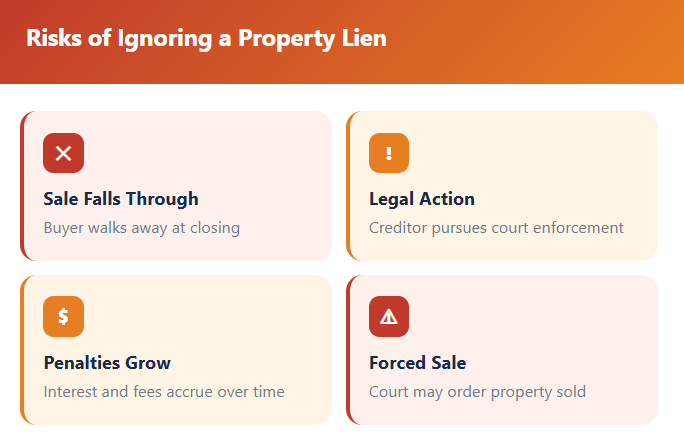
Ignoring a lien does not make it go away. In most cases, the consequences become more serious over time.
- Failed sale — A buyer’s title company will identify the lien, and most buyers will not proceed without resolution.
- Legal enforcement — The lien holder may pursue legal action to collect, which could include garnishment or further court orders.
- Forced sale — In some cases, a creditor can petition the court to force a sale of the property to satisfy the debt. This is more common with tax liens and judgment liens.
- Accruing penalties and interest — Unpaid liens often grow over time. Interest, penalties, and collection fees can increase the total amount owed significantly.
Oregon law provides timelines and procedures for lien enforcement. Ignoring the issue limits your options and can result in a more costly resolution later.
Bottom Line
A lien is a legal claim against your property that typically must be resolved before you can sell or transfer ownership. In Oregon, title companies will identify liens during the closing process, and buyers generally require clear title before completing a purchase.
Resolution is possible in most cases. Options include paying the lien from sale proceeds, negotiating a reduced payoff, disputing inaccurate claims, or working with a buyer experienced in lien-related transactions. The key is to identify the lien early and understand the available paths forward.
Frequently Asked Questions
Can I sell my house if I have a judgment lien?
Yes. A judgment lien does not permanently prevent a sale. In most cases, the lien is paid from the sale proceeds at closing, or the seller negotiates a settlement with the lien holder before the transaction is finalized.
How do I find out if my property has a lien?
You can search public records through your county recorder’s office or request a preliminary title report from a title company. In Oregon, lien records are generally available through county clerk databases.
Who pays a lien at closing?
Typically, the seller is responsible for satisfying any liens on the property. The title company deducts the lien amount from the seller’s proceeds and pays the lien holder directly as part of the closing process.
Do liens expire in Oregon?
Some liens do have expiration periods under Oregon law. Judgment liens, for example, are generally valid for ten years and can be renewed. Tax liens and mechanic’s liens have their own statutory timeframes. Expiration depends on the lien type and whether renewal actions were taken.
Can a lien force the sale of my home?
In certain situations, yes. A creditor holding a lien may petition the court to force a sale of the property to satisfy the debt. This is more common with tax liens and certain judgment liens. Voluntary resolution before this stage is generally preferable.

Hi, I’m Bob Bash, founder of OR Home Buyers, serving the Oregon community since 2017. We provide full-service real estate solutions, specializing in cash purchases for both residential and commercial properties. I started this business to help our community navigate difficult real estate situations with professionalism, ethics, and compassion.
My goal is simple: to make every client feel relieved and happy when their real estate challenges are resolved. Helping people find solutions and peace of mind is what drives me every day.